

Breast cancer symptoms can sometimes be difficult to notice, especially in the early stages. Knowing the early signs of breast cancer and understanding when to seek medical attention can help with timely detection and treatment. While a breast lump is one of the most commonly recognized warning signs, it is not the only change women should watch for.
Breast cancer can develop without obvious symptoms, making awareness and appropriate screening important. Changes in the breast, nipple, skin or underarm area can sometimes indicate a problem that needs medical evaluation.
This means that breast cancer can affect women even when there is no known family history.
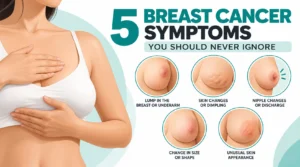
Know the signs. Don’t ignore changes.
What Is Breast Cancer?
Breast cancer occurs when abnormal cells in breast tissue grow uncontrollably and form a tumour. These cells can begin in the milk ducts or milk-producing lobules and, in some cases, spread to nearby lymph nodes or other parts of the body.
The good news is that early detection can make a significant difference. Finding breast cancer at an earlier stage can allow treatment to begin sooner.
That is why knowing the early signs of breast cancer is so important.
5 Warning Signs of Breast Cancer
1. A New Lump in the Breast or Underarm
A new lump or thickening in the breast or underarm area is one of the most well-known breast cancer warning signs.
A cancerous lump may not necessarily be painful. WHO recommends seeking medical attention for an abnormal breast lump, even when it does not hurt.
However, not every breast lump means cancer. Many breast lumps are caused by non-cancerous conditions such as cysts or fibrocystic breast changes.
What should you do?
If you notice a new or unusual lump that wasn’t there before, don’t try to diagnose it yourself. Schedule an appointment with a healthcare professional for proper evaluation.
2. A Change in the Size or Shape of Your Breast
Breasts naturally vary in size and shape, and they can change because of hormonal fluctuations, pregnancy, breastfeeding, ageing and weight changes.
However, a new or unexplained change in breast size or shape should not be ignored.
Changes may include:
- One breast becoming noticeably different from the other
- A new change in breast contour
- Swelling in part or all of the breast
- A visible change that persists
The CDC lists changes in breast size or shape among possible symptoms of breast cancer.
If the change is new and unusual for you, speak with a doctor.
3. Changes in the Skin of the Breast
Your skin can sometimes provide an important clue.
Possible breast cancer symptoms can include:
- Dimpling of the breast skin
- Redness
- Irritation
- Swelling
- Pitting or changes in skin texture
- Flaky skin around the nipple
These changes don’t automatically mean cancer. Several non-cancerous conditions can cause similar symptoms.
But if you notice a persistent or unexplained change, it is better to have it evaluated rather than assuming it will disappear on its own.
4. Nipple Changes or Unusual Discharge
Pay attention to changes in the nipple or the skin around it.
Potential warning signs include:
- A nipple turning inward
- Changes in the appearance of the nipple
- Persistent irritation around the nipple
- Unusual nipple discharge
- Bloody nipple discharge
Nipple discharge can occur for several reasons and isn’t necessarily cancer. However, unusual or bloody discharge should be evaluated by a healthcare professional.
5. Persistent Breast Pain or Other Unusual Changes
Breast pain alone does not necessarily indicate breast cancer. Hormonal changes and several benign breast conditions can cause pain or tenderness.
However, persistent or unexplained breast pain—especially when accompanied by another change—should be discussed with a doctor.
The CDC includes pain in any area of the breast among possible breast cancer symptoms.
The important message is simple:
Know what is normal for your breasts and pay attention to changes.
Can Breast Cancer Have No Symptoms?
Yes.
Some people with breast cancer may have no noticeable signs or symptoms, particularly in the early stages.
This is one reason breast cancer screening is important.
A mammogram is an X-ray image of the breast that can detect some breast cancers before they become large enough to feel or cause symptoms.
So, waiting for a lump or other obvious symptom isn’t always the best approach.
Why Is a Mammogram Important?
A mammogram is a breast X-ray used to look for early signs of breast cancer.
Screening mammograms can sometimes detect breast cancer before symptoms appear. Regular screening can therefore help identify cancer earlier, when treatment may be easier.
The appropriate age and frequency for mammography can depend on factors such as:
- Age
- Personal medical history
- Family history
- Genetic risk
- Previous breast conditions
- Other individual risk factors
There isn’t one screening schedule that is appropriate for every woman.
Talk to your doctor about when you should start mammography and how frequently you should have it.
Does Having No Family History Mean You Are Safe?
No.
Having a family history of breast cancer can increase risk, but many women diagnosed with breast cancer do not have a known family history.
WHO reports that approximately 80% of breast cancers occur in women without specific risk factors other than sex and age.
This is why thinking “breast cancer won’t happen to me” can be risky.
Instead, focus on knowing your personal risk, recognizing changes and following appropriate screening recommendations.
Can You Prevent Breast Cancer?
There is no guaranteed way to prevent breast cancer.
However, some lifestyle factors can influence breast cancer risk. WHO identifies factors including increasing age, obesity, alcohol use, family history, radiation exposure, reproductive history and tobacco use among factors associated with breast cancer risk.
You can support your overall health by:
- Maintaining a healthy weight
- Staying physically active
- Avoiding tobacco
- Limiting alcohol
- Understanding your family and personal medical history
- Following appropriate screening recommendations
- Discussing concerning breast changes with a doctor
Remember, lifestyle choices can help reduce risk but cannot completely eliminate the possibility of breast cancer.
When Should You See a Doctor?
Don’t wait if you notice a new or unusual breast change.
Speak to a healthcare professional if you experience:
✔ A new breast or underarm lump
✔ Persistent breast swelling or thickening
✔ A change in breast size or shape
✔ Dimpling or unusual skin changes
✔ Nipple inversion or other nipple changes
✔ Unusual or bloody nipple discharge
✔ Persistent or unexplained breast pain
These symptoms can have causes other than cancer, so having a symptom does not mean you have breast cancer. But getting the right medical evaluation is important
Early Detection Matters
Breast cancer awareness isn’t only about knowing what a lump feels like.
It is about understanding the different signs and symptoms of breast cancer, knowing your personal risk and discussing appropriate screening with your healthcare provider.
A mammogram may detect breast cancer before it can be felt or cause symptoms, while medical evaluation can help investigate changes that you notice yourself
Don’t ignore a change. Don’t panic either. Get it checked.
If you notice something unusual in your breast, consult a qualified healthcare professional for appropriate evaluation.
Also Read: Signs and symptoms of breast cancer
Breast Cancer Care at Maiya Hospital
At Maiya Hospital, Jayanagar, Bengaluru, patients can access multidisciplinary healthcare services, including surgical oncology. The hospital lists breast cancer surgery among the specializations of its surgical oncology team. Maiya Hospital
For any new breast symptom or concern, a medical evaluation can help determine whether further tests or specialist consultation are needed.