
Polycystic Ovary Syndrome (PCOS) is a common hormonal condition that can affect women during their reproductive years. It can influence menstrual cycles, hormone levels, skin, hair growth, metabolism and fertility.
Many women may not immediately recognize the early PCOS symptoms because they can vary from person to person. Some women may experience irregular periods, while others may first notice acne, unwanted facial hair, unexplained weight changes or difficulty becoming pregnant.
Recognizing PCOS symptoms early can help women seek appropriate medical evaluation and manage the condition effectively.
What Is PCOS?
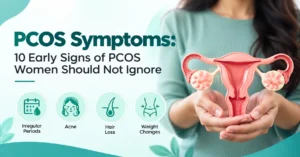
PCOS Symptoms: 10 Early Signs Women Should Not Ignore
Also Read: Irregular Periods: 8 Essential Causes, Symptoms & When to See a Doctor
PCOS is a hormonal and metabolic condition associated with irregular ovulation and increased levels or effects of androgens (hormones that are present in both women and men).
PCOS can affect menstrual cycles and fertility and may also be associated with insulin resistance and other metabolic health concerns. Not every woman with PCOS experiences the same symptoms.
10 PCOS Symptoms and Early Signs Women Should Know
1. Irregular or Missed Periods
One of the most common symptoms is an irregular menstrual cycle.
Women with PCOS may:
- Have periods that occur infrequently
- Skip periods
- Have unpredictable menstrual cycles
- Experience very heavy bleeding during some periods
Irregular periods can happen for many reasons, so they do not automatically mean that someone has PCOS. However, persistent menstrual irregularities should be discussed with a healthcare professional.
2. Excess Facial or Body Hair
An increase in androgen activity can cause excessive hair growth, particularly on areas such as the:
- Face
- Chin
- Upper lip
- Chest
- Abdomen
This condition is known as hirsutism and is a common symptom associated with PCOS.
3. Persistent or Severe Acne
Hormonal changes associated with PCOS can contribute to persistent acne.
Some women may experience acne on the:
- Face
- Chest
- Back
Adult acne that persists despite usual skincare or treatment may be worth discussing with a doctor, particularly when it occurs alongside irregular periods or excess hair growth.
4. Unexplained Weight Gain or Difficulty Losing Weight
Some women with PCOS experience weight gain or find it difficult to lose weight.
This can be associated with metabolic changes and insulin resistance, although not every woman with PCOS is overweight. Weight alone cannot be used to diagnose PCOS.
5. Thinning Hair or Hair Loss
PCOS-related hormonal changes can sometimes contribute to thinning scalp hair or female-pattern hair loss.
If hair thinning occurs together with irregular periods, acne or increased facial hair, it may be useful to discuss these symptoms with a gynaecologist.
6. Dark, Thickened Skin Patches
Some women with PCOS may develop darker, thicker or velvety-looking skin, particularly around the:
- Neck
- Armpits
- Groin
This condition is called acanthosis nigricans and can be associated with insulin resistance.
7. Difficulty Getting Pregnant
PCOS can affect ovulation, which may make it more difficult for some women to conceive.
Because irregular or absent ovulation can interfere with the menstrual cycle and fertility, some women discover they have PCOS when they seek help for difficulty becoming pregnant. However, having PCOS does not mean that pregnancy is impossible. Many women with PCOS can become pregnant with appropriate care.
8. Oily Skin
Hormonal changes associated with PCOS may increase oil production in the skin.
Persistent oily skin, particularly when accompanied by acne and other hormonal symptoms, can be one of the signs worth discussing with a healthcare professional.
9. Skin Tags
Small, soft skin growths called skin tags may occur in some women with PCOS, particularly around the neck or armpits.
Skin tags can have many causes, so they should not be considered a diagnostic sign of PCOS on their own.
10. Changes in Ovulation
Some women with PCOS do not ovulate regularly. This can lead to irregular periods and may affect fertility.
Because ovulation problems are not always obvious, women experiencing persistent menstrual changes or difficulty conceiving should consider speaking with a gynaecologist for appropriate evaluation.
What Causes PCOS?
The exact cause of PCOS is not fully understood. Genetics, hormonal factors and metabolic factors such as insulin resistance can play a role.
Higher androgen levels can interfere with regular ovulation and contribute to symptoms such as acne and excess hair growth. Insulin resistance can also contribute to increased insulin levels and hormonal changes associated with PCOS.
Can PCOS Affect Fertility?
Yes. PCOS can affect fertility because irregular ovulation can make it harder to predict when an egg will be released.
However, a diagnosis of PCOS does not mean a woman cannot become pregnant. Treatment and fertility planning can be tailored according to the individual’s symptoms, health and pregnancy goals.
How Is PCOS Diagnosed?
There is no single test that confirms PCOS in every woman, so doctors consider a combination of symptoms, medical history and test results.
A doctor may consider:
- Menstrual and medical history
- Physical examination
- Hormone-related blood tests
- Blood glucose or metabolic tests when appropriate
- Pelvic ultrasound when indicated
Other conditions that can cause similar symptoms may also need to be ruled out before a diagnosis is made.
Do not self-diagnose PCOS based on one symptom. Irregular periods, acne, weight changes or hair growth can have several possible causes.
How Is PCOS Treated?
There is no single treatment that works for every woman with PCOS. Treatment depends on the person’s symptoms, overall health and whether pregnancy is currently desired.
Depending on individual needs, a doctor may recommend:
- Lifestyle and dietary changes
- Regular physical activity
- Weight management when appropriate
- Medicines to help regulate menstrual cycles
- Treatment for acne or excess hair growth
- Medicines to address insulin resistance when appropriate
- Fertility treatment for women trying to conceive
Regular medical follow-up can also help monitor associated metabolic health risks.
When Should You See a Gynaecologist?
Consider consulting a gynaecologist if you experience:
- Frequently missed or irregular periods
- Persistent acne after adolescence
- New or excessive facial/body hair
- Unexplained hair thinning
- Unexplained weight changes
- Difficulty becoming pregnant
- Multiple symptoms occurring together
Early evaluation can help identify the underlying cause and determine an appropriate treatment plan.
Understanding common PCOS symptoms can help women recognize changes in their menstrual cycle, skin, hair and overall health and seek appropriate medical advice.
Takeaway
Also Read: Polycystic Ovary Syndrome (PCOS)
PCOS symptoms can look different from one woman to another. Irregular periods, excess facial hair, persistent acne, weight changes, hair thinning and fertility difficulties are among the signs that may be associated with PCOS.
If you notice persistent or multiple symptoms, don’t rely on online symptom checkers or self-diagnosis. A qualified gynaecologist can assess your symptoms, perform the necessary tests and guide you toward appropriate care.
At Maiya Hospital, women can consult the Obstetrics & Gynaecology team for evaluation and management of concerns related to menstrual health, PCOS, fertility and other women’s health conditions.