
When a Mole Needs Medical Attention: 5 Warning Signs
Moles are common skin growths that can appear anywhere on the body. Most moles are harmless and do not require treatment. However, certain changes in the size, shape, colour or texture of a mole may indicate an underlying skin problem, including skin cancer. One of the most serious conditions associated with unusual moles is melanoma, a type of skin cancer that can develop in existing moles or appear as a new spot on the skin.
Recognising the early warning signs of an abnormal mole is important for protecting your skin health. While not every unusual mole is dangerous, knowing when to consult a dermatologist can help detect potential skin problems early.
Here are five warning signs that a mole needs medical attention.
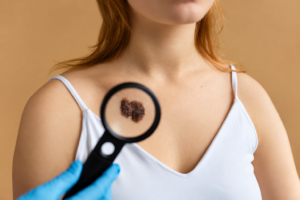
Close-up of a mole being examined for potential skin abnormalities.
1. Changes in the Size of a Mole
One of the first warning signs of an abnormal mole is a noticeable change in its size. Most ordinary moles remain relatively stable over time. However, if a mole starts growing quickly, becoming wider or developing an unusual appearance, it should be examined by a dermatologist.
Although some moles may naturally change during childhood and adolescence, new or growing moles in adulthood deserve attention, particularly when the growth is rapid or accompanied by other changes.
What to look for:
-
A mole that gradually becomes larger.
-
A new spot that grows noticeably within a few weeks or months.
-
An existing mole that changes in thickness or height.
-
A mole that looks different from your other moles.
A growing mole does not automatically mean skin cancer, but it is important to get unexplained changes checked.
2. Irregular Shape or Uneven Borders
Most harmless moles are round or oval with smooth, well-defined edges. In contrast, potentially concerning moles may have irregular shapes or uneven borders.
An unusual mole may have edges that appear blurred, jagged, notched or poorly defined. These changes can be associated with melanoma, especially when combined with differences in colour or size.
What to look for:
-
Uneven or irregular edges.
-
One half of the mole looking different from the other.
-
A mole with an unusual or asymmetrical shape.
-
Borders that appear blurred or poorly defined.
If a mole develops an irregular shape or its borders change over time, consult a skin specialist for an examination.
3. Changes in Colour or Multiple Shades
A typical harmless mole often has a consistent colour, usually brown, black or tan. However, a mole that develops multiple colours or uneven pigmentation may need medical attention.
Changes in colour can sometimes be an early warning sign of melanoma. A suspicious mole may contain different shades of brown, black, red, pink, white or blue.
What to look for:
-
A mole that suddenly becomes darker.
-
Different colours appearing within the same mole.
-
Uneven pigmentation or patches of different shades.
-
A mole that loses its original colour or develops unusual spots.
It is important to remember that colour variation alone does not confirm skin cancer. A dermatologist can determine whether further investigation is necessary.
4. Itching, Bleeding or Pain Around the Mole
Most ordinary moles do not cause discomfort. If a mole becomes persistently itchy, painful, tender or starts bleeding without an obvious injury, it should not be ignored.
These symptoms can occur for several reasons, including irritation, infection or skin conditions. However, they may also indicate changes that require medical evaluation.
What to look for:
-
Persistent itching around the mole.
-
Bleeding without scratching or accidental injury.
-
Crusting or repeated scabbing.
-
Pain, tenderness or unusual sensitivity.
-
A mole that develops an open sore or does not heal.
If you notice any of these symptoms, schedule an appointment with a dermatologist rather than attempting to treat the mole yourself.
5. A New Mole Appearing in Adulthood
Moles commonly develop during childhood and adolescence. However, a new mole appearing during adulthood, particularly after the age of 30, deserves attention.
Not every new mole is dangerous, but melanoma can develop as a new spot rather than from an existing mole. This is why it is important to monitor newly appearing skin growths.
Pay particular attention to spots that look noticeably different from your existing moles. Dermatologists sometimes refer to this as the ugly duckling sign, where one mole looks different from all the others.
What to look for:
-
A new dark spot appearing on the skin.
-
A mole that looks different from your other moles.
-
A new growth that changes rapidly.
-
A spot that develops irregular borders or multiple colours.
If you notice a new or unusual mole in adulthood, arrange a professional skin examination.
Understanding the ABCDE Rule for Detecting Suspicious Moles
The ABCDE rule is a commonly used guideline that helps identify moles that may require medical evaluation. It focuses on five important characteristics associated with melanoma.
| Letter | Warning sign | What it means |
|---|---|---|
| A | Asymmetry | One half of the mole does not match the other. |
| B | Border | The edges are irregular, blurred or uneven. |
| C | Colour | Multiple or uneven colours appear within the mole. |
| D | Diameter | The mole is often larger than 6 mm, although melanoma can be smaller. |
| E | Evolving | The mole changes in size, shape, colour or appearance over time. |
If a mole shows one or more of these characteristics, consult a dermatologist. Remember that melanoma can sometimes occur without displaying all five warning signs.
What Causes Unusual Moles?
Moles develop when pigment-producing skin cells called melanocytes grow in clusters. Most are harmless, but certain factors can increase the risk of developing melanoma or other skin cancers.
Some common risk factors include:
-
Excessive sun exposure: Frequent exposure to ultraviolet (UV) radiation can damage skin cells.
-
Sunburn history: Severe or repeated sunburns, particularly during childhood, can increase melanoma risk.
-
Family history: Having a close family member with melanoma may increase your risk.
-
Fair skin: People with lighter skin, freckles or skin that burns easily may have a higher risk.
-
Numerous moles: Having many moles or atypical moles can increase the risk of melanoma.
However, melanoma can affect people of all skin tones, including those with darker skin.
How to Protect Your Skin and Prevent Skin Cancer
Although not all cases of skin cancer can be prevented, adopting healthy skin protection habits can help reduce the risk of UV-related skin damage.
Here are some practical steps to follow:
-
Use sunscreen daily: Apply broad-spectrum SPF 30 or higher sunscreen to exposed skin, even on cloudy days.
-
Avoid excessive sun exposure: Limit direct sunlight, particularly between 10 AM and 4 PM when UV rays can be stronger.
-
Wear protective clothing: Use hats, sunglasses and clothing that covers exposed skin.
-
Check your skin regularly: Monitor existing moles and look for new or unusual spots.
-
Schedule skin examinations: Consult a dermatologist if you notice suspicious changes in your moles.
Taking these precautions can help maintain healthy skin and improve the chances of identifying unusual changes early.
When Should You See a Dermatologist?
You should consult a dermatologist if you notice a mole that changes in size, shape or colour, develops irregular borders, bleeds repeatedly or causes persistent itching or pain.
A dermatologist may examine the mole using a specialised instrument called a dermatoscope. If the mole appears suspicious, a skin biopsy may be recommended to determine whether abnormal or cancerous cells are present.
Do not wait for a mole to become painful before seeking medical advice. Melanoma may not cause discomfort during its early stages.
Early detection is important because melanoma is generally more treatable when identified before it spreads to other parts of the body.
Frequently Asked Questions (FAQs)
1. How do I know if a mole is cancerous?
A mole that changes in size, shape or colour, has irregular borders or develops multiple shades may be suspicious. Persistent itching, bleeding and the appearance of a new unusual spot can also require medical attention. Only a medical examination and, when necessary, a biopsy can confirm whether a mole is cancerous.
2. Are all new moles in adults dangerous?
No. Many new moles are harmless. However, a new mole appearing during adulthood, particularly after age 30, should be monitored and examined if it looks unusual or starts changing.
3. Can a normal-looking mole turn into melanoma?
Yes. Some melanomas develop from existing moles, while others appear as entirely new spots on the skin. Regular skin checks can help identify suspicious changes.
4. Does an itchy mole mean skin cancer?
Not necessarily. Itching can result from dryness, irritation or other skin conditions. However, persistent itching, especially when accompanied by bleeding, colour changes or growth, should be evaluated by a dermatologist.
5. When should I get a mole removed?
A mole may need removal if it is suspicious, repeatedly irritated or causing discomfort. A dermatologist will assess the mole and decide whether removal and biopsy are necessary. Avoid removing moles at home.
Also Read: 5 Warning Signs Your Mole Should Be Checked by a Dermatologist
Conclusion
Moles are usually harmless, but changes in their appearance should never be overlooked. Unusual growth, irregular borders, multiple colours, persistent itching and new spots appearing in adulthood are important warning signs that may require medical attention.
Understanding the ABCDE rule and checking your skin regularly can help you recognise potentially suspicious moles. If you notice any unusual changes, consult a dermatologist for a proper evaluation.
Remember, early detection and timely medical attention can make a significant difference in identifying and treating skin cancer.