
C-Section Recovery Guide: Healing After Caesarean Delivery
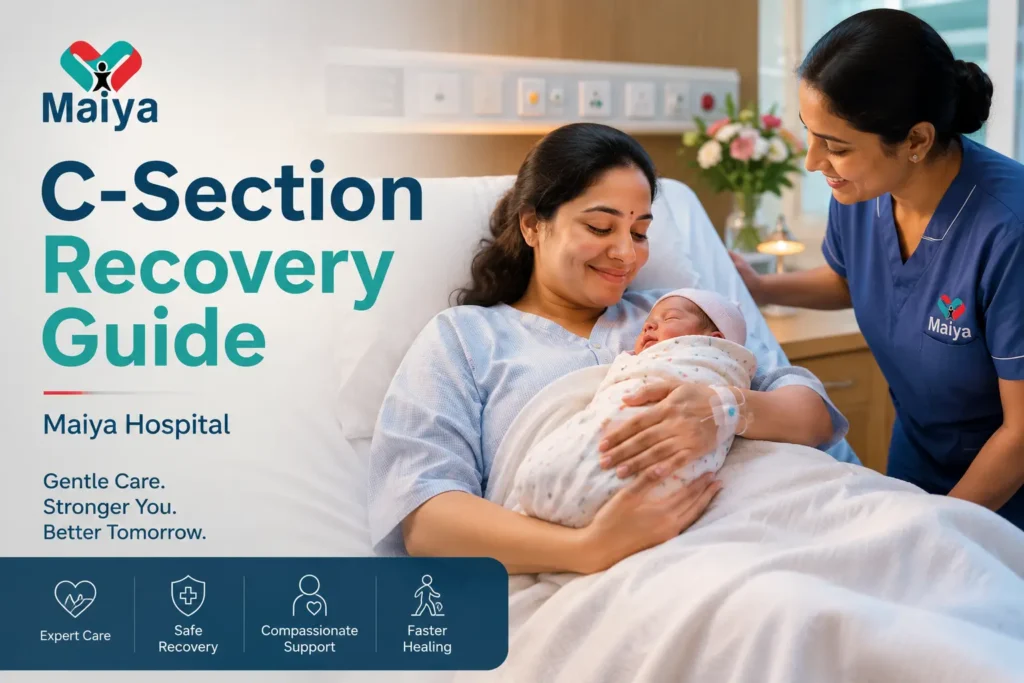
A Caesarean section (C-section) is one of the most common surgical procedures in the world — and in Bangalore, it accounts for a significant proportion of hospital deliveries. Whether your C-section was planned or an emergency decision made in the labour room, recovery requires the right care, the right information, and the right medical support. This comprehensive guide from the surgical and obstetric team at Maiya Hospital, Jayanagar walks you through every step of C-section recovery in Bangalore.
Related Reading: Normal Delivery Tips Bangalore
- Prenatal Care in Bangalore: Week-by-Week Pregnancy Guide
- Maternity Care in Bangalore: Complete Guide for Expecting Mothers
What Happens During a Caesarean Section?
A C-section is a surgical delivery in which your obstetrician makes a horizontal incision (called a Pfannenstiel incision) just above the pubic hairline to access the uterus and deliver the baby. The procedure typically takes 45-60 minutes in total, with the baby being delivered within the first 10-15 minutes. At Maiya Hospital, all C-sections are performed in Modular Operation Theatres under either spinal anaesthesia or general anaesthesia depending on the clinical situation.
WHO C-Section Guidelines: WHO guidelines on appropriate caesarean section rates
The First 24-48 Hours After C-Section
The immediate post-operative period after a C-section is managed in Maiya Hospital’s recovery area and then your maternity ward room. Here is what to expect:
- Pain Management: You will receive prescribed pain relief medication. Most mothers experience moderate to severe pain in the first 24 hours. Do not hesitate to ask your nurse for pain relief — undertreated pain slows recovery
- IV Fluids: You will have an intravenous drip for at least 12-24 hours until you can take adequate fluids by mouth
- Urinary Catheter: A Foley catheter placed during surgery remains for 12-24 hours post-op
- Early Mobilisation: You will be encouraged to sit up and take your first steps within 12-24 hours — early movement dramatically reduces the risk of blood clots (DVT), promotes bowel recovery, and shortens hospital stay
- Wound Care: Your incision is dressed and monitored daily for signs of infection, opening, or delayed healing
- Breastfeeding: Breastfeeding can and should begin in the first few hours after C-section. Our lactation consultants will position you and your baby correctly, given the abdominal wound
Week-by-Week C-Section Recovery Timeline
Week 1: Rest and Wound Care
The first week of C-section recovery is about rest, pain management, and protecting your wound. You will be discharged from Maiya Hospital typically on day 3-5 post-surgery (depending on your recovery progress). At home: sleep when the baby sleeps, avoid lifting anything heavier than your newborn, keep the incision dry and clean, and return to hospital immediately if you notice redness, discharge, fever, or increasing pain at the wound site.
Weeks 2-3: Gradual Mobilisation
Pain begins to subside significantly by week 2. You can start short, gentle walks. Continue avoiding strenuous activity, driving, and heavy lifting. The internal stitches (which are absorbable) are healing, and the external wound should be well-closed. Your abdomen may still feel tight and tender — this is normal.
Week 4-5: Building Strength
Most mothers feel substantially better by weeks 4-5. You can gradually resume light household activities. Avoid vigorous exercise, abdominal crunches, or anything that causes wound pain. Begin gentle pelvic floor exercises (kegels) as recommended by your physiotherapist.
Week 6: The 6-Week Check-Up
Your 6-week postnatal check-up at Maiya Hospital is a critical appointment. Your obstetrician will assess your wound healing, uterine recovery, blood pressure, and mental health. This visit also covers contraception discussion and clearance for resuming normal activities including exercise and sexual intercourse.
NHS C-Section Recovery Guide: NHS comprehensive C-section recovery advice
C-Section Diet: What to Eat After Caesarean Delivery
Nutrition plays a crucial role in C-section recovery. Your body needs the right nutrients to heal the surgical wound, maintain breast milk production, and restore energy levels.
- Protein-rich foods: Lentils, eggs, chicken, paneer, and legumes — essential for tissue repair
- Iron-rich foods: Spinach, bajra, dates, pomegranate — to replenish blood lost during surgery
- Vitamin C: Citrus fruits, amla, bell peppers — enhances iron absorption and wound healing
- Fibre-rich foods: Whole grains, oats, fruits, vegetables — prevents constipation (common post-C-section due to pain medication and reduced activity)
- Adequate hydration: 8-10 glasses of water daily supports recovery and breastfeeding
- Avoid: Gas-forming foods like cabbage, cauliflower, beans initially — bloating causes significant post-operative discomfort
Healthline Post-Surgery Nutrition: https://www.healthline.com/nutrition/what-to-eat-after-surgery
C-Section Scar Care
A well-healed C-section scar is flat, pale, and minimally visible. Scar management begins once the wound is fully closed (usually by week 4-6). Tips from Maiya Hospital’s surgical team:
- Silicone gel or strips (available in pharmacies): Start after the wound is fully closed, use for 3-6 months
- Gentle massage: Once healed, regular massage with coconut oil or vitamin E oil improves scar texture and reduces tightness
- Sun protection: Keep the scar covered or apply SPF 50+ sunscreen when exposed — UV darkens scars
- Avoid tight clothing: Waistbands that press directly on the incision can cause irritation and keloid formation
When to Call the Doctor After C-Section
Contact Maiya Hospital immediately at +91 7406007777 if you experience:
- Fever above 38 degrees Celsius
- Increasing redness, swelling, or discharge from the wound
- Heavy vaginal bleeding (soaking more than one pad per hour)
- Severe or worsening abdominal pain
- Signs of blood clot: swollen, red, painful calf; shortness of breath; chest pain
- Emotional distress, inability to cope, or signs of postpartum depression
NCBI Post-C-Section Recovery Research: Research on post-caesarean recovery protocols and outcomes