34, 10th Main Rd, 1st Block, Jayanagar
1st Block, Bengaluru, Karnataka 560011
Support Email:
info@maiyahospital.in
Emergency: 24/7
OPD: 9:00 AM - 8:00 PM
Call Us Urgent 24/7
+91 7406007777

For any medical emergency, accidents, sudden illness, or urgent care needs, please contact Maiya Multi Speciality Hospital immediately.

Our emergency team is available 24 hours a day, 7 days a week to provide quick and life-saving treatment.

Get Directions
34, 10th Main Rd, 1st Block, Jayanagar
1st Block, Bengaluru, Karnataka 560011
Support Email:
info@maiyahospital.in
Emergency: 24/7
OPD: 9:00 AM - 8:00 PM
Call Us Urgent 24/7
+91 7406007777

For any medical emergency, accidents, sudden illness, or urgent care needs, please contact Maiya Multi Speciality Hospital immediately.

Our emergency team is available 24 hours a day, 7 days a week to provide quick and life-saving treatment.

Get Directions

Kidney Stone Removal

Expert kidney stone removal at Maiya Hospital, Jayanagar Bangalore. ESWL, PCNL, ureteroscopy (URS) — minimally invasive techniques, experienced urologists. Book consultation today

Call Us when you Need Help!
24/7 Support: +91 70223 16149

About Kidney Stone Removal

Kidney stones (renal calculi) are hard deposits of minerals and salts that form inside the kidneys. When stones are too large to pass naturally, surgical intervention is required. At Maiya Hospital, we offer the complete spectrum of minimally invasive kidney stone removal techniques — including ESWL (shockwave lithotripsy), ureteroscopy (URS) with laser lithotripsy, and PCNL (percutaneous nephrolithotomy) for large or complex stones — ensuring the most targeted, effective, and least invasive treatment for every patient.


Severe, sudden flank or back pain (renal colic) — often radiating to the lower abdomen or groin
Nausea and vomiting accompanying severe pain episodes
Haematuria — blood in the urine (pink, red, or brown discolouration)
Frequent urination, urgency, and burning sensation on urination
Fever and chills if a urinary infection is associated with the stone
Reduced urine output if the stone is causing urinary obstruction

Challenges And Treatments

Challenges Encountered

Selection of the most appropriate stone removal technique for each patient — ESWL vs URS vs PCNL based on stone size, location, density, and anatomy
Residual stone fragments (steinstrasse) after ESWL — managed with follow-up imaging and repeat procedure if needed
Bleeding risk in PCNL — minimised with careful tract dilation and haemostatic technique

Treatment Methods

ESWL (Extracorporeal Shock Wave Lithotripsy) — non-invasive shockwaves to break stones into passable fragments
URS (Ureteroscopy) with Holmium laser lithotripsy — endoscopic stone fragmentation and extraction
PCNL (Percutaneous Nephrolithotomy) — for large (>2 cm) or complex renal stones
DJ stenting — ureteric stent placement to relieve obstruction and aid stone fragment passage

Surgical Procedure

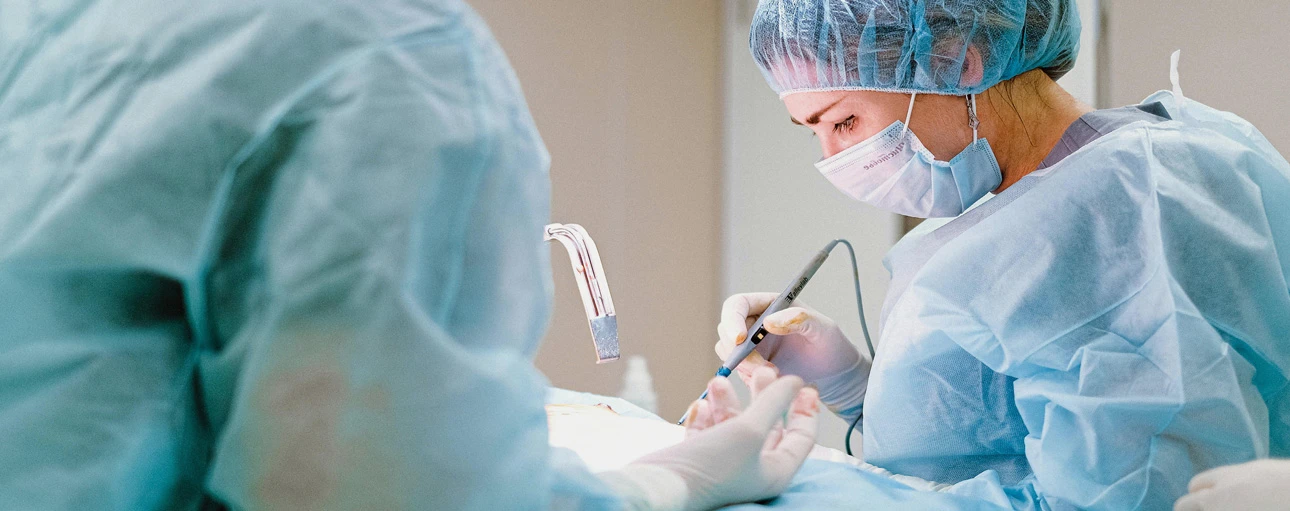
The technique is selected based on stone characteristics. ESWL uses focused shockwaves externally to break stones. URS involves passing a small camera through the urethra and bladder to the ureter, then using a Holmium laser to fragment the stone and retrieve fragments. PCNL involves a small puncture in the back to directly access the kidney and remove large stones. All endoscopic procedures are performed under spinal or general anaesthesia.

Complete or near-complete stone clearance confirmed by post-procedure imaging
Immediate relief from severe renal colic following stone removal
Discharge within 1–2 days — quick return to normal daily activities
Post-treatment dietary and metabolic counselling to prevent recurrence